


Designing the ideal entertainment space requires more than picking out a screen, speakers, and a comfortable chair. One of the most important decisions involves choosing whether your home theatre installation should take place in a dedicated room or whether you prefer the flexibility of a multi-use media room. Each approach delivers a different style of immersion, and the right choice depends on how your household watches movies, hosts guests, and uses adjacent living spaces.
Having a home theatre can greatly enhance your movie-watching experience.
Considerations for your home theatre installation include lighting, seating, and acoustics.
As a trusted leader in system design and installation throughout the Puget Sound region, Theater One helps homeowners identify which style best aligns with their lifestyle, acoustics, architecture, and long-term entertainment goals. Both room types can achieve remarkable performance when properly designed — the difference lies in the function and the character of the space.
Below is an in-depth look at how to choose the right environment for your home, along with the factors Theater One evaluates during the consultation and installation process.

A well-designed home theatre can provide an immersive viewing experience that rivals commercial cinemas.
Investing in a home theatre setup can significantly increase your enjoyment of films and shows.
Choosing the right components for your home theatre is essential for achieving high-quality sound and visuals.
The proper acoustics in your home theatre can make a significant difference in the overall experience.
Consider using soundproofing techniques to enhance your home theatre’s acoustics.
Home theatre seating should prioritize comfort for long viewing sessions.
Adding custom millwork can elevate the aesthetic of your home theatre.
Understanding the Dedicated Home Theatre Room
When planning your home theatre, think about how the layout can enhance the viewing experience.
A dedicated home theatre room is designed for one primary purpose: pure cinematic immersion. Everything in the space — from layout to lighting to seating — is planned to eliminate distractions and direct all attention to the screen and soundscape.
Key Characteristics of Dedicated Theatres
1. Controlled Lighting
Dedicated rooms typically eliminate natural light, making them ideal for projection systems. Deep wall colors, blackout shades, and hidden lighting channels create an atmosphere similar to a commercial cinema.
2. Optimized Acoustics
Because the room is built for one purpose, Theater One can implement strategic acoustic treatments, including front-of-room absorption, surround-area diffusion, soffit design, and bass management tailored to the room’s dimensions.
3. Precise Speaker Placement
Dedicated rooms allow for architecturally ideal placement of front LCR speakers, subwoofers, ceiling speakers for Dolby Atmos, and side/rear surrounds. This ensures a soundstage that performs exactly as intended by the filmmaker.
4. Specialized Seating Layouts
Recliners, curved rows, or tiered platforms maximize the viewing experience for every seat. The flow and spacing can be planned without compromise.
5. A More Theatrical Atmosphere
Sconce lighting, starfield ceilings, acoustic wall panels, carpeting, and custom millwork create the ambience of a high-end cinema experience right at home.

When Dedicated Rooms Make the Most Sense
Multi-use media rooms can also serve as informal home theatres for family movie nights.
You’ll prefer a dedicated home theatre installation if:
- You want a true cinema environment.
- You value controlled acoustics.
- Your home can support a separate enclosed space.
- You enjoy movie nights, sports events, and gaming in a darkened room.
- You plan to invest in high-performance speakers and projection.
Your home theatre should reflect your personal preferences and lifestyle needs.
The result is a room that transports viewers into the world on screen — uninterrupted, unshared with other household functions, and deeply immersive.
The Multi-Use Media Room: Versatility Meets Entertainment
Not every home or family prefers a darkened, single-use theater room. In many modern homes, open-concept living and large multi-purpose spaces have become the norm. A media room fuses living, lounging, and entertainment into a single cohesive space.
Think about how your home theatre setup can accommodate social gatherings and events.
Key Characteristics of Media Rooms
1. Flexible Lighting and Layout
Media rooms often include windows, brighter wall tones, and a room layout that serves multiple purposes — conversation, gaming, reading, and entertainment.
2. Display Versatility
Large QLED or OLED panels, ultra-short throw projectors, and ambient light rejecting screens are popular choices because they perform well in spaces that aren’t fully dark.
3. Furniture With Multiple Uses
Seating may include sectionals, loungers, or configurable seating instead of fixed rows. The space may incorporate a bar, shelves, or reading nooks.
4. Multi-Zone Audio Opportunity
Because media rooms connect naturally to adjacent spaces like kitchens or dining rooms, whole-home audio systems become an appealing addition. Theater One can integrate a media room into a wider audio system using brands like Sonos, RBH Sound, Marantz, Denon, or Savant Music.
5. Social Atmosphere
Media rooms encourage conversation, casual hosting, gaming, and family nights. It is a more open, communal environment with entertainment at the center.
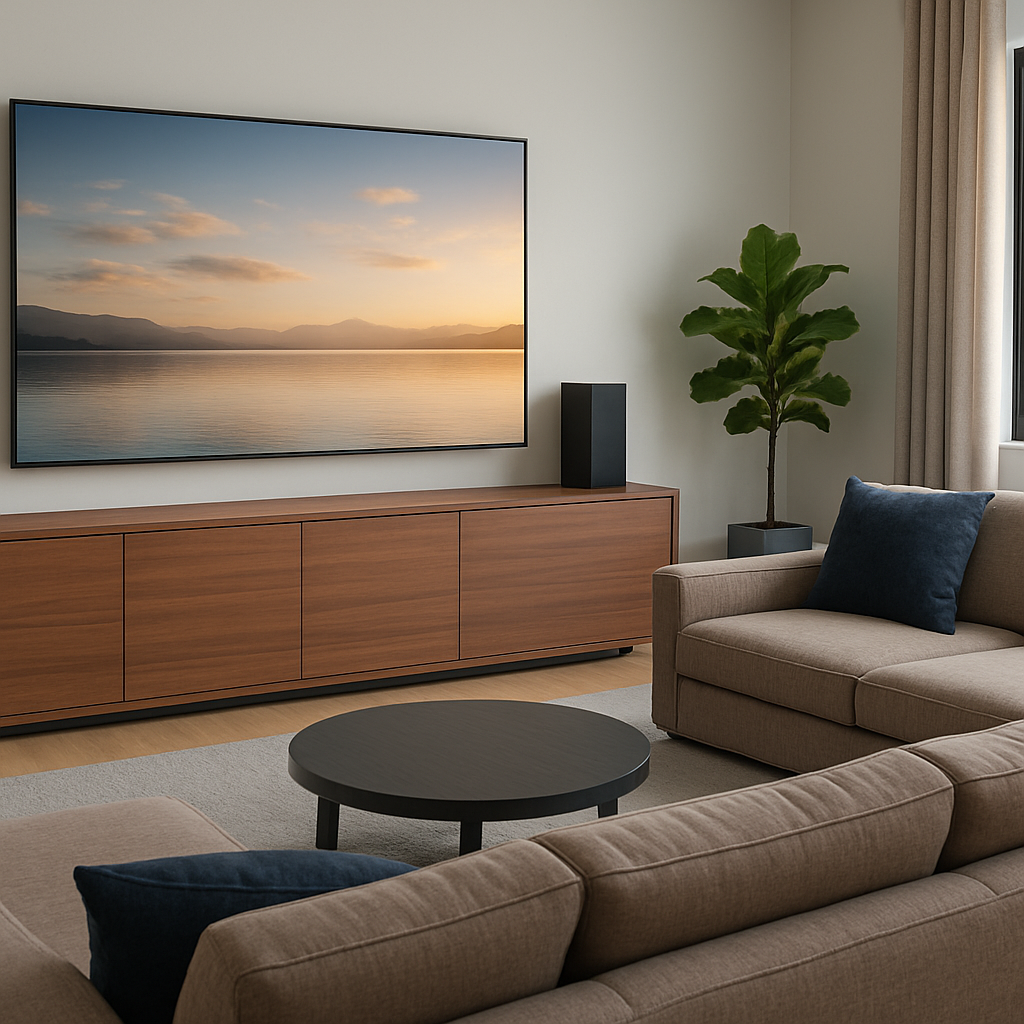
When Media Rooms Are the Ideal Choice
A media room may be right for you if:
Evaluate your room dimensions carefully to optimize your home theatre layout.
Lighting control is crucial in a home theatre for creating the perfect atmosphere.
- You prefer a bright, social space.
- You want entertainment integrated into everyday living.
- Your home doesn’t have an enclosed room available.
- You prioritize multi-purpose functionality over total cinematic isolation.
- You’re drawn to modern living rooms where entertainment blends seamlessly with décor.
How to Decide: Key Factors Theater One Evaluates
Choosing between a dedicated home theatre and a multi-purpose media room becomes much easier when you understand what influences the performance and usability of each space. Theater One’s process includes a deep evaluation of:
1. Lighting Conditions
A dedicated theater thrives in low-light environments. Media rooms work better with ambient light-friendly displays.
Theater One assesses natural light exposure, windows, ceiling height, and existing electrical placement.
2. Room Dimensions and Shape
Some rooms naturally lend themselves to full cinematic setups due to depth, width, or ceiling height. Others support mixed-use spaces more gracefully.
Theater One uses digital modeling to map:
- Speaker placement
- Viewing angles
- Seating distances
- Acoustic reflections
- Projection lines
3. Acoustic Behavior
Rectangular, enclosed rooms support precise acoustics; open-concept spaces may require more distributed audio solutions.
Theater One evaluates wall construction, flooring type, ceiling treatments, and how sound will flow through the space.
A home theatre can enhance your overall viewing pleasure by offering a dedicated space.
4. Primary Use Cases
Before recommending a direction, Theater One asks:
- How often do you watch films?
- Will the room host gatherings or daily family activities?
- Do you prefer a traditional theater feel or a living-space integration?
- What’s the viewing angle from each seat?
5. Technology Preferences
Projectors, Atmos audio systems, star ceilings, and tiered seating align with dedicated rooms.
Media rooms align with:
- OLED panels
- Hybrid seating
- Multi-zone audio
- Voice or touch-based smart control
Theater One customizes technology recommendations that reflect the home’s architecture and each client’s habits.
6. Aesthetic Vision and Long-Term Design Goals
Some homeowners want a dramatic, luxurious cinematic environment. Others want a space that blends quietly with modern décor.
Theater One’s team collaborates with homeowners to balance:
- Architectural style
- Furniture choices
- Lighting scenes
- Color palettes
- Trim and paneling elements
The final design feels intentional, cohesive, and visually harmonious.

Collaborating With Theater One for the Perfect Entertainment Space
Whether you choose a dedicated theatre room or a multi-purpose media room, the key to a flawless installation lies in expert planning, precision, and long-term support. Theater One brings decades of experience in system design, acoustic assessment, smart integration, and aesthetic craftsmanship.
Clients benefit from:
- Personalized in-home assessments
- CAD layout and acoustic modeling
- Expert installation
- Projector and audio calibration
- Smart system integration (Control4, Savant)
- Long-term service and system upgrades
The result is a system tailored to your home, your family, and your entertainment style.
To explore what’s possible for your space—or to book a home consultation—visit theaterone.com.
Choosing the right technology for your home theatre can greatly impact the experience.