


Picking the right camera is the first step in a solid security plan. Modern cameras share much of the same technology inside. The form factor is what changes. Shape, housing, and mount style all affect how a camera performs in a given spot. In Puyallup, Tacoma, and the wider Puget Sound area, rain, night vision, and curb appeal all matter.
Theater One has been building entertainment and security spaces since 2000. A camera system is only as good as its design and its install. Maybe you want visible hardware that warns people off. Maybe you want gear that blends into the roofline. Knowing the main types of surveillance cameras helps you choose well.
What Are the Three Main Types of Surveillance Cameras Form Factors?
The three main types of surveillance cameras are bullet, dome, and turret. Bullet cameras are shaped like a tube and easy to spot, so they warn people off. Dome cameras are round and low profile, and they resist tampering. Turret cameras use a ball-and-socket body and handle night vision well.
These shapes are not just about looks. The housing sets the field of view, the water and dust rating, and how the camera handles infrared light at night. When we design a Surveillance system, we mix these types of surveillance cameras. That way every corner is covered and the home still looks good.
Bullet Cameras: Visible Deterrence for Long Ranges

Bullet cameras have a long, barrel-like body. They mount on walls or eaves and watch a set area, like a driveway or a fence line. They are built to be seen. A visible camera tells anyone walking up that the area is on video, which can stop trouble before it starts.
Pros of Bullet Cameras:
- High visibility. The shape stands out and warns people off.
- Long-range vision. The longer housing fits a larger lens. That helps you see far down a driveway.
- Easy aiming. The mount arm swivels, so you can point it almost anywhere.
Cons of Bullet Cameras:
- Exposure. They stick out from the wall. That makes them easier to hit or knock out of aim.
- Spider webs. The overhang draws spiders. Webs can block the lens and set off false motion alerts.
In the Pacific Northwest, bullet cameras are a common pick for outdoor perimeters. They work when you want the camera seen. We check that each one is rated for our wet weather, so moisture stays out.
Dome Cameras: Discreet Monitoring and Vandal Resistance

Dome cameras sit inside a round housing that covers the lens. The low profile suits entryways and indoor rooms. The smooth shape is hard to grab or twist, so the camera resists tampering. Tinted glass also hides the lens, so it is hard to tell where the camera points.
Pros of Dome Cameras:
- Discreet look. They blend into soffits, ceilings, and overhangs.
- Vandal resistance. Many domes carry a high impact rating (IK10), which guards against physical attacks.
- Wide angle. They suit wide views of porches, patios, or living rooms.
Cons of Dome Cameras:
- IR reflection. The curved cover can bounce infrared light back into the lens at night. The image then looks foggy.
- Harder to adjust. Changing the view means pulling the cover and moving the lens by hand.
- Upkeep. Rain drops cling to the dome. The image can look warped until they dry.
We often suggest dome cameras for front doors and indoor spaces. You get the same monitoring without a lens jutting out of the wall.
Turret Cameras: Superior Night Vision and Flexibility
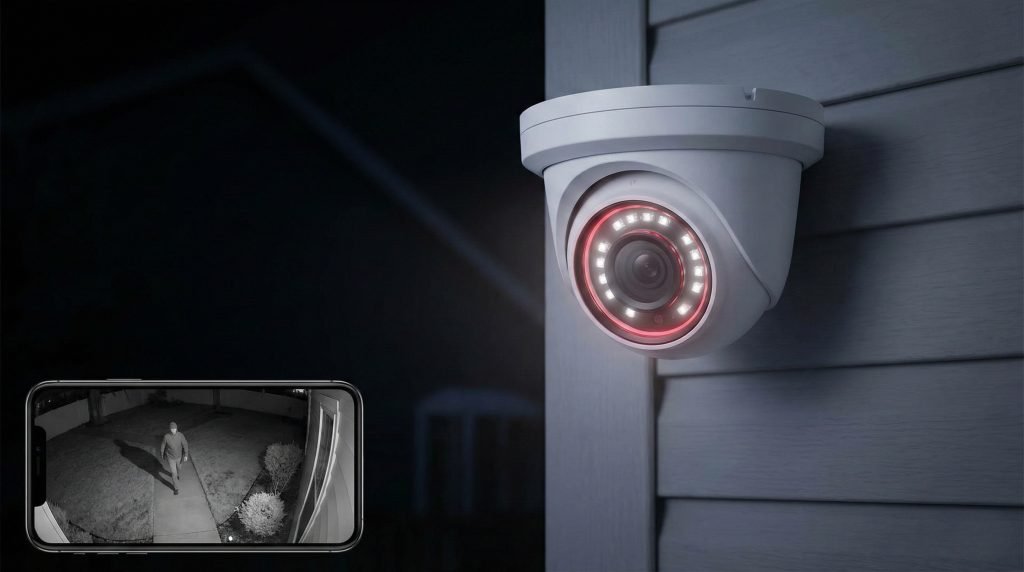
Turret cameras, sometimes called eyeball cameras, use a ball-and-socket mount. You get the easy aiming of a bullet with the low profile of a dome. Turrets have no glass cover in front of the lens. That removes infrared glare and keeps the image crisp, even in full darkness.
Pros of Turret Cameras:
- Strong night vision. The lens and the IR LEDs sit apart. That stops light bleed and glare, so low-light images stay clear.
- Low upkeep. No glass dome means no trapped water drops or dust glare. They need less cleaning.
- Easy to angle. The ball-and-socket joint turns and tilts, during install or years later.
Cons of Turret Cameras:
- Looks. They are smaller than bullets. They still do not sit as flush as a dome.
- Impact risk. They hold up less well to direct hits than a high-rated vandal dome.
Turret cameras have become a favorite for home installs, thanks to their reliability and image quality. They shine on Projects with tricky outdoor lighting, or spots that are hard to reach for service.
Comparison: Bullet vs. Dome vs. Turret
Here is a quick side-by-side look at the three types of surveillance cameras. Use it to match a camera to a spot on your property. Bullet cameras favor reach and deterrence. Dome cameras favor a low profile and toughness. Turret cameras favor night images and easy upkeep.
| Feature | Bullet Camera | Dome Camera | Turret Camera |
| Primary Use | Long-range, visible deterrence | Discreet monitoring, vandal prone areas | General purpose, superior night vision |
| Visibility | High (Obvious) | Low (Discreet) | Medium |
| Night Vision | Good | Fair (prone to IR glare) | Excellent |
| Installation | Flexible arm mount | Ceiling/Surface mount | Ball-and-socket mount |
| Weather/Cleaning | Prone to spider webs | Rain can distort image | Best for rain/low maintenance |
| Vandal Resistance | Low | High | Medium |
Integrating Cameras into a Smart Home System

Security works best when it ties into the rest of the smart home. A standalone camera app leaves you juggling screens. Cameras integrated into a broader smart home platform, such as Control4 or Elan, show live feeds on touchscreens, TVs, or phones. They sit beside your lighting and climate controls.
Benefits of integration include:
- Automatic responses. Lights can switch on when a camera sees motion in the driveway.
- One app. You do not need a separate security app. It all lives in your main smart home interface.
- Remote alerts. Get rich alerts with snapshots on your phone, sent through your Smart Home Automation system.
Groups like CEDIA, the custom electronics trade association, note that integrated systems tend to be more reliable and more satisfying to use than pieced-together DIY gear. A tied-in security layer should fit your routine, not fight it.
Professional Installation vs. DIY Solutions
Professional installation puts each camera where it covers the most ground. Wiring is hidden, and the system is tuned to cut down on false alerts. DIY kits often run on batteries and Wi-Fi. Wired Power over Ethernet (PoE) links, used in pro setups, tend to hold up better over the long haul.
An installer evaluates the specific geometry of your home to pick the right types of surveillance cameras for each spot. We look at sun angles, growing trees, and blind spots. Pro-grade gear also tends to offer higher resolution and better build quality. Our Gallery shows what a clean, wire-free install looks like.
Conclusion

A good security setup is about matching the camera to the job, not just buying a box. You may want the visible warning of a bullet, the discretion of a dome, or the night vision of a turret. Theater One can help you design a system that fits your home.
Read our Reviews to see how we have helped other Puget Sound homeowners protect their property. Ready to talk through your options? Contact us to start planning. We can confirm which features fit your home during a consultation.
FAQ About Types Of Surveillance Cameras
Below are the questions homeowners ask us most about the types of surveillance cameras. The answers cover night vision, mixing camera styles, vandal resistance, and wiring. If your situation is different, we are happy to walk through it with you and confirm the right features during a consultation.
What are the best types of surveillance cameras for night vision?
Turret cameras usually lead for night vision. The lens sits apart from the infrared LEDs. That gap stops glare and light bleed, a common issue with dome cameras. The result is a clearer image in low light.
Can I mix different types of surveillance cameras in one system?
Yes. Pro systems let you run bullet, dome, and turret cameras on one recorder. That way an installer can use each shape where it works best. Domes suit a porch. Bullet cameras suit a fence line. Coverage stays complete.
Do dome cameras have better vandal resistance than bullet cameras?
Dome cameras hold up better to tampering than bullet cameras. The round, low-profile shape is hard to grab, hang on, or knock out of aim. Many models also use high-impact glass rated IK10, built to take a physical blow.
Why are hardwired cameras better than wireless ones?
Hardwired cameras use Power over Ethernet (PoE). One cable carries both power and data. You do not depend on batteries or a Wi-Fi signal that comes and goes. That steadiness is why wired links are the norm for security work. Wi-Fi still carries your phone alerts and remote viewing, and the Wi-Fi Alliance certifies that gear.
What are the main types of surveillance cameras available today?
Common types of surveillance cameras include turret, dome, and bullet models. You will also see PTZ (pan-tilt-zoom) cameras and box cameras. Each shape suits a different job, from wide porch views to long driveway runs.
What advantages do bullet cameras offer compared to other types of surveillance cameras?
Bullet cameras see well at a distance, so they suit long driveways, parking areas, and property lines. The longer body fits a bigger lens. Most outdoor models come in weather-rated housings built for rain and wind.
Are dome cameras suitable for outdoor use?
Yes. Many dome cameras are made for outdoor use. Look for a weather rating and, if the spot is exposed, a vandal-resistant housing. Those models work well on porches, soffits, and covered entries.
What are the benefits of using PTZ cameras over fixed cameras?
PTZ cameras pan, tilt, and zoom on command. One camera can then cover a large yard or lot. A fixed camera holds one view that cannot change. PTZ units cost more and need someone or something to steer them.
Which type of surveillance camera is best for low-light conditions?
Cameras with infrared LEDs handle low light well. Turret models tend to do best, since the lens sits away from the LEDs and avoids glare. Good outdoor lighting also helps any camera capture usable detail at night.
How can I choose the right type of surveillance camera for my needs?
Start with the area you need to watch. Then look at lighting, the resolution you want, and features like motion alerts or remote viewing. Mount height and weather exposure matter too. We can confirm the right fit during a consultation.